
Learn
Craft Glossary
Fabric
Artisans
Dye
Technique
Fabric A-Z
Khadi is a handspun and handwoven fabric made from natural fibres such as cotton, silk, or wool. Known for its breathability, strength, and subtle irregularities, it embodies sustainable textile craftsmanship and a low-impact production process.
Organic Cotton is hand-harvested from plants grown without synthetic chemicals. Its fibres retain natural softness, strength, and breathability, making them ideal for durable, comfortable garments. Ethically sourced, it supports artisan communities and traditional farming practices while reducing environmental impact.
Tussar Silk is a handspun, handwoven silk with a natural golden hue and slubbed texture, produced by silkworms feeding on forest leaves. Carefully harvested and woven by traditional Indian artisans, it is lightweight, breathable, and retains colour and elasticity, reflecting centuries of craft.
Matka Silk is handcrafted from pierced or broken silk cocoons, giving it a rustic, textured surface and natural slub. Lightweight, breathable, and soft to the touch, each piece carries unique irregularities that celebrate artisanal craft and timeless elegance.
Ketya Silk is handwoven silk dyed with the natural Ketya pigment, known for warm, earthy reds and browns. Each length reflects artisanal craft, with subtle variations that make every textile unique, soft to the touch, and sustainably produced.
Artisans A-Z
Anuprerna is a sustainable textile manufacturer located in West Bengal, India. They work with over 300 artisans across 25 weaving clusters, producing eco-friendly fabrics including khadi, linen, and various silks. Their focus is on blending traditional craftsmanship with modern design.
⚲ West Bengal, India
Kala Swaraj Foundation is a non-profit initiative based in Bhopal, India. Committed to preserving traditional handloom weaving; they collaborate with artisans to revive and sustain regional weaving techniques, ensuring fair wages and access to markets. They work to empower their artisans, the continuity of regional crafts and the betterment of their community as a collective.
⚲ Bhopal, Madhya Pradesh, India
Porgai supports rural Lambadi communities in Sittilingi, India, through traditional hand embroidery. Their hand-embroidered textiles are crafted by skilled artisans, combining heritage techniques with sustainable practices to create unique, high-quality pieces.
⚲ Sittilingi, Tamil Nadu, India
Sri Aurobindo Handmade Paper in Pondicherry creates durable, high-quality paper from recycled cotton rag. Each sheet is hand-lifted, pressed, and dried, reflecting a legacy of sustainable craft and meticulous artisanal skill.
⚲ Pondicherry, India
Vanavil trains and employs local women in Sittilingi Valley to produce complete garments, from pattern-making to tailoring. Led by master tailors, the solar-powered studio ensures ethical working conditions while preserving traditional skills.
⚲ Sittilingi, Tamil Nadu, India
Dye A-Z
Natural dye colours textiles using plant, mineral, or insect-based pigments. Each piece is hand-dyed, sustainable, and reflects the skill of artisans preserving traditional dyeing techniques.
Indigo is a natural blue pigment extracted from the leaves of the Indigofera plant. The leaves are harvested, fermented, and processed to create the dye. Fibres such as cotton and silk are repeatedly dipped and oxidised in the indigo bath to build up deep, rich blue tones. Each hand-dyed piece reflects the natural variations in colour that result from this traditional process.
AZO free dyes are free from harmful chemicals, creating vibrant, safe, and eco-conscious fabrics. This method protects both artisans and the environment while producing long-lasting colours; as well as looking after the wearer's skin from any chemical irriations with longterm wear.
Technique A-Z
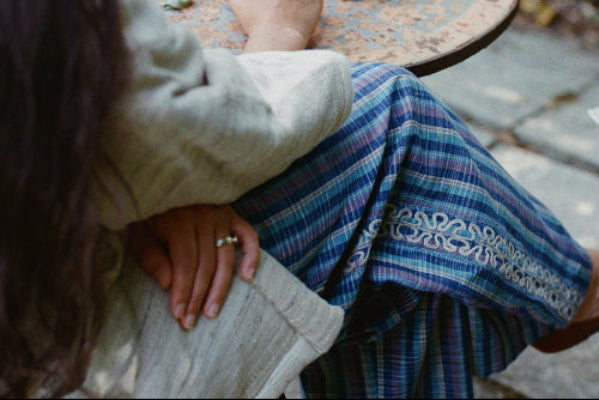
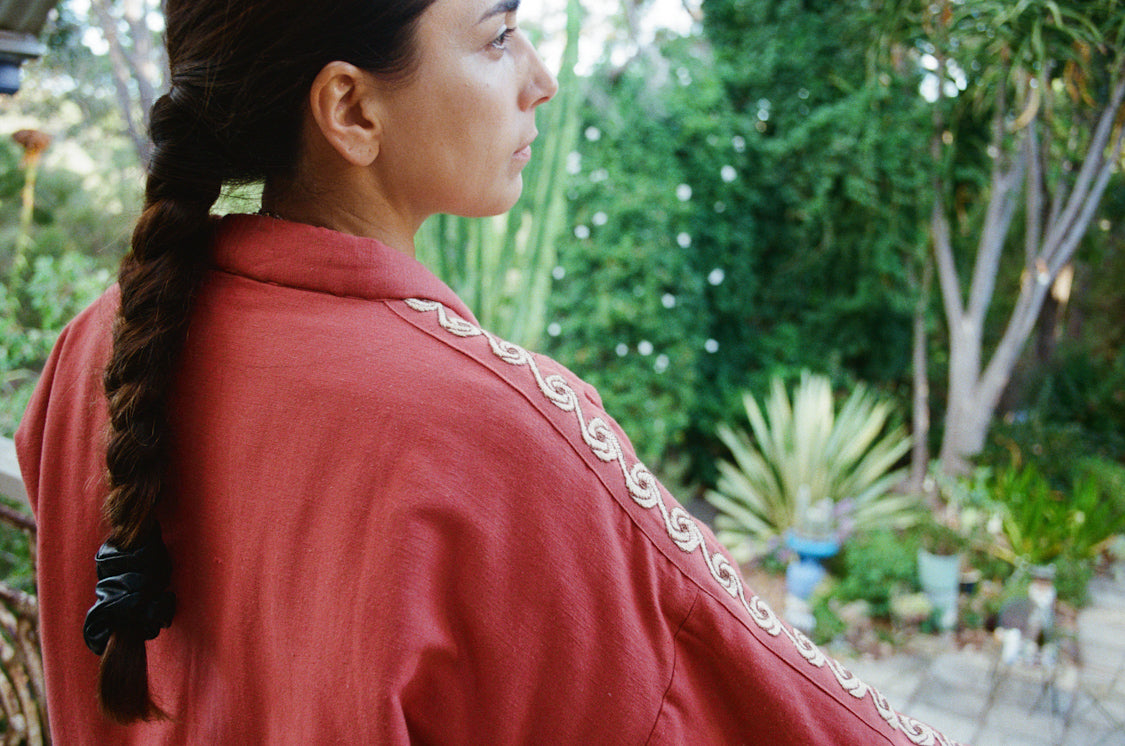
Lambadi embroidery, developed by the nomadic Lambadi tribe, features intricate hand-stitched patterns and mirrorwork used in traditional garments. Porgai Artisans continue this craft, preserving the vibrant stitches and heritage, creating unique fabrics that celebrate centuries of skill and artistry.
Handloom fabrics are woven entirely by hand on a wooden frame, with each warp and weft carefully interlaced to create precise patterns, textures, and structural integrity. The process requires meticulous attention to tension, alignment, and rhythm, often taking hours or even days to produce a single piece of fabric. Nüwa Mano exclusively uses handloom textiles, honouring the skill, time, and individuality of the artisans.
Handspun refers to the traditional craft of turning raw fibers into yarn entirely by hand. Each twist, tension, and pull reflects the artisan’s skill, producing subtle variations that give every thread and fabric a unique, living character.
Unbaled Cotton revives pre-colonial Indian textile practices, avoiding compression that weakens fibers. The result is stronger, more flexible, and breathable cotton that retains the natural character and integrity of the hand-processed material.
CMT (Cut, Make, Trim) encompasses the full garment construction process—from patternmaking and sampling, to cutting, sewing, and finishing with buttons, trims, and details—ensuring each piece is crafted with precision and care. Nüwa Mano collaborates with Vanavil, an association that trains and empowers local tribal women in the complete CMT process.