Porgai Artisan Association
A BEGINNING IN HEALTH
Porgai began not as a business of craft, but with two doctors under the thatched roof of a 10-bed tribal hospital in Tamil Nadu’s Sittilingi Valley. In the 1993, Dr. Lalitha Regi and Dr. George Regi, a young couple specialising in gynaecology and aesthesia respectively, began the Tribal Health Initiative (THI) to provide essential healthcare to the Lambadi community.
The result? A three wing hospital with surgery and specialities, and a reduction of infant mortality rates by 86.4% over the span of 15 years. At last count, the Tribal Health Initiative recorded 28.6% less infant mortality than the Indian average. The THI hospital provides doctors with training programs, and local villagers with opportunities to study, train and work.
As local medical health steadily improved, new questions emerged: How can we care for a community before illness strikes?
The answer included restoring economic dignity. Migration for work, loss of native crops, and poor nutrition showed that health depends on more than medicine; it’s tied to income, food, and identity. Organic cotton and food farming were reintroduced to revive traditional knowledge and local livelihoods.
Finding that they needed a market for their organic cotton, in tandem with the reimergence of their near-lost traditional Lambadi embroidery; Porgai was born.
FROM ALMOST LOST TO REVIVED
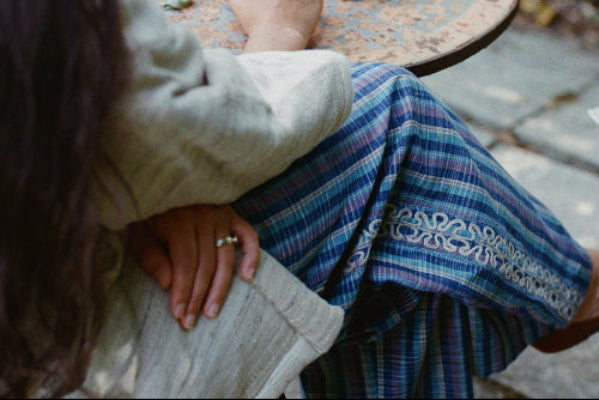
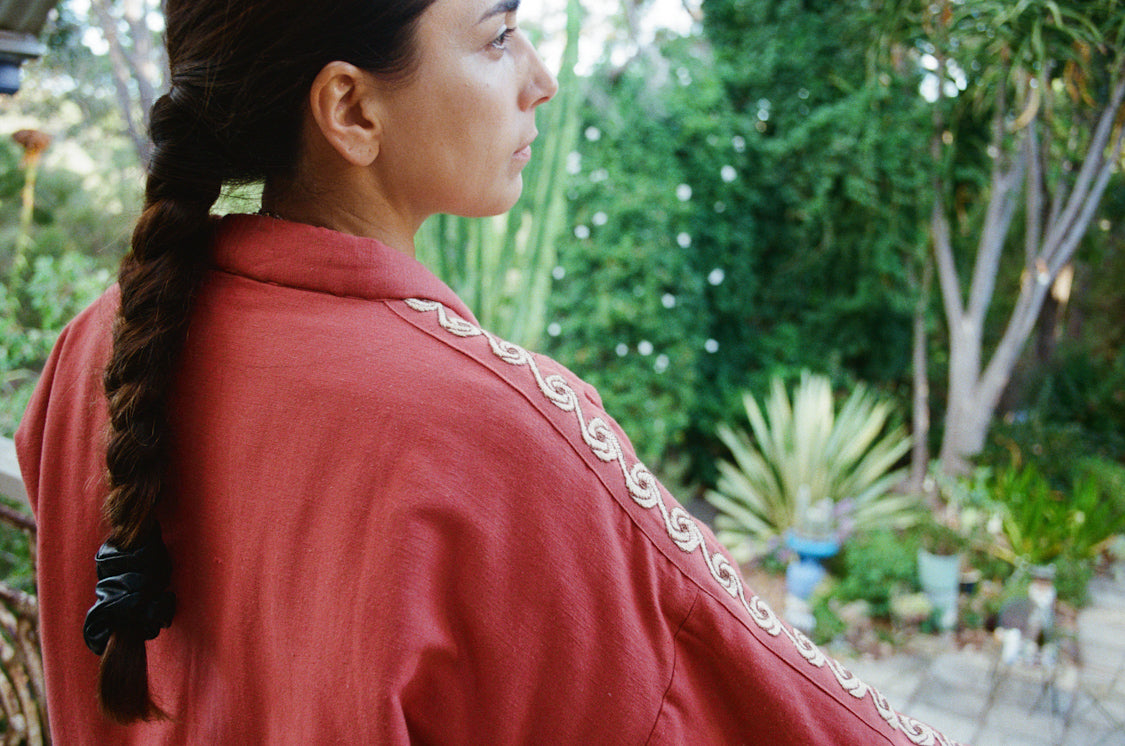
Lambadi embroidery has been used by its people to decorate, patch and adorn their clothing for centuries. With cheaper modern sarees replacing the adoption of traditional Lambadi dress, the knowledge of their traditional embroidery was nearly lost. Over time, the techniques and those using them dwindled, until it was preserved in the memories of only two tribal women, Neela and Gammi.
In 2006, with encouragement from Tribal Health Initative, they began teaching other local women, and a new artisan collective was born.
Today, over 60 Lambadi women run Porgai, using traditional stitches to create fair livelihoods and preserve cultural heritage. Their work has gained national and international recognition, from Vogue to museum exhibitions, showing the global power of rooted craft.
LIVES OF THE ARTISANS
The women of Porgai are not just artisans, some of them are also farmers, mothers and caretakers. This balance of domestic, agricultural and creative work is at the heart of the Porgai story. These women provide for their families, their earnings support education, household expenses, savings and the community as a whole.
They are the backbone of their homes and their community, crafting not just textiles, but a future of dignity, stability, and pride.
OUR COLLABORATION
In May 2025, we made a whirlwind 24-hour journey to Sittilingi Valley. What began as a brief visit quickly became a clear decision: Porgai was the perfect place to begin. Their craft, story, business model, and commitment to community resonated deeply with our own values.
Since our first trip, we have returned to spend weeks working with the artisans—listening to their stories, learning how to design with their craft, and sharing meals (read: being lovingly force-fed a generous amount of incredible food). This exchange has become the heart of our collaboration.
For us, Porgai is more than a collaborator. It is a living example of how craft, health, and community intertwine, showing that beauty and purpose are inseparable when people are placed at the centre of making.